Microplates: Assay and PCR
Polystyrene assay plates, glass bottom plates and PCR plates. Filter by well count, color and bottom type.

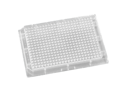
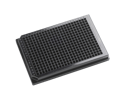
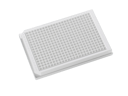
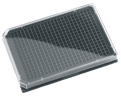
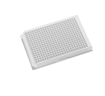
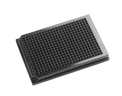

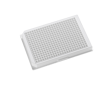

Polystyrene assay plates for absorbance, fluorescence and luminescence reads, in 24 and 384 well formats. Choose clear, white or black plates, solid or clear bottom, with high binding and tissue culture treated options.
Browse 384 well assay plates, 96 well clear bottom assay plates and 96 well solid polystyrene plates.
Specifications across the family
- Well count: 24, 96 and 384
- Colors: Clear for absorbance, white for luminescence, black for fluorescence (the dark walls cut well to well crosstalk)
- Bottoms: Solid, and clear bottom for reads through the well floor
- Surfaces: Standard, high binding, and tissue culture treated
- Example dimensions: The 384 well clear plate AWLS-221003 holds 120 µL per well, flat bottom, 127.7 x 85.7 mm footprint, 15.05 mm height, 11.65 mm well depth, 3.65 mm square opening, 4.5 mm pitch
- Material note: Polystyrene is the read material. For storage, solvents and freezing, the same work belongs in polypropylene; the comparison is Polypropylene or Polystyrene?
Start with these plates
- AWLS-221003, 384 well clear polystyrene, 120 µL, flat bottom, for absorbance reads at 384 density.
- 384 well assay plates, the full 384 range with its specifications.
- 96 well clear bottom assay plates, for reads through the well floor and imaging.
- 96 well solid polystyrene plates, the standard absorbance format.
Questions
Clear, white or black?
Clear for absorbance, where the light passes through the sample. White for luminescence, where the walls reflect signal back to the detector. Black for fluorescence, where dark walls absorb stray light and cut crosstalk between wells.
What does a clear bottom change?
The well walls can be black or white while the floor stays clear, so the plate reads from below and can be imaged, with the wall color still doing its work on stray light.
When is high binding or tissue culture treatment needed?
High binding surfaces hold more protein for immunoassays. Tissue culture treated surfaces are for adherent cells. Both are surface options on the plate, chosen by the assay, not by the format.